Dr. med. univ. Thomas R. V. Hirtl
Chest Specialist - Tuberculosis
×
Über mich Tuberkulose Aktuelles Vergangenes Links Kontakt
German Version

About me

Curriculum vitae

I was born in Vienna
Visited the elementary school and the Gymnasium Maroltingergasse
Studied medicine in Vienna
Also studied philosophy, Catholic theology, and ancient Greek
Assistant at the Institute of Applied and Topographical Anatomy
Trained as a general practitioner at Krankenhaus Lainz
Trained as a specialist in pulmonology at the First Department of the Pulmologisches Zentrum (formerly "Lungenheilstätte Baumgartner Höhe," later Otto Wagner-Spital, now Klinik Penzing), Vienna
Completed the environmental medicine course and received a diploma from the Austrian Medical Association

May 1998: Wilhelm Neumann Prize for scientific research on the tuberculin skin test
Author of the book „Das Tuberkulin"
National and international lectures

June 1998: Marriage to Dr. vet. Med. Ulrike Hirtl
August 1999: Birth of daughter Johanna
April 2000: Move to Lilienfeld
September 2000: Birth of daughter Katharina
April 2000: Establishment of the pulmonology practice in Lilienfeld
November 2005: Birth of son Viktor
Scientific collaboration on the "Österreichische Empfehlungen zur Umgebungsuntersiuchung bei Tuberkulose“ (Austrian Recommendations for Conducting Contact Tracing in Tuberculosis Contacts) of the Austrian Federal Ministry of Health in 2015
Scientific collaboration on the amendment to the Tuberculosis Act in 2016
December 31, 2022: Handover of the practice in Lilienfeld to Dr. Irene Tomala


Since then, continued representation activities
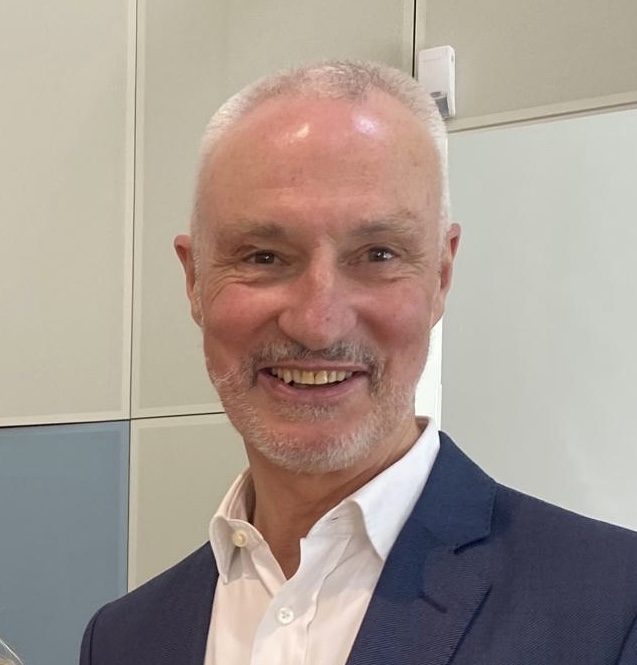
Porträt Dr. med. univ. Thomas R. V. Hirtl
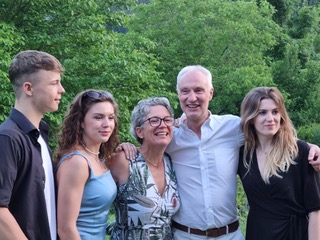
Family

About Dr. med. univ. Thomas R. V. Hirtl

I was born in 1957.
I grew up in the "Lungenheilstätte Baumgartner Höhe" in Vienna's 14th district. My father was a physician there. It was a sanatorium for patients suffering from tuberculosis founded in 1923. This sanatorium was formerly part of the Lower Austrian State Mental Hospital, the largest psychiatric hospital in Europe, opened in 1907. The architect was Adolf Loos. I'm still amazed today at how well-thought-out the complex was. The sanatorium consisted of many pavilions of varying sizes, located in an enclosed green area. Each building had a specific function: There was a surgery, a department for orthopedics, pavilions for children (with schools), a pavilion for the elderly and those who could no longer be cured, the internal medicine pavilions, a dedicated kitchen, and large "economic grounds" that supplied the hospital with vegetables, fruit, and meat.

Therefore, from the very beginning, I learned how to deal with illness, fear, and death. So, there was no doubt in my mind that I wanted to study medicine. But medicine alone was never enough for me. Therefore, I was always interested in other fields.
The best part about working at the hospital was the exchange with colleagues. I also closely followed how medicine is practiced in other countries. And I was interested in alternative healing methods.
My wife and I moved to Lilienfeld because my wife's grandmother lived in Rohrbach an der Gölsen, about 20 km from Lilienfeld. This way, she could look after our young children, and we could care for her as she grew older.
And, of course, we were fascinated by the nature here, as Lilienfeld is located in the foothills of the Alps. After all, my wife and I come from families of skiers and athletes.
Besides medicine, and apart from family, of course, I have always been interested in philosophy, history, and literature.


And sometimes I enjoy just doing nothing.